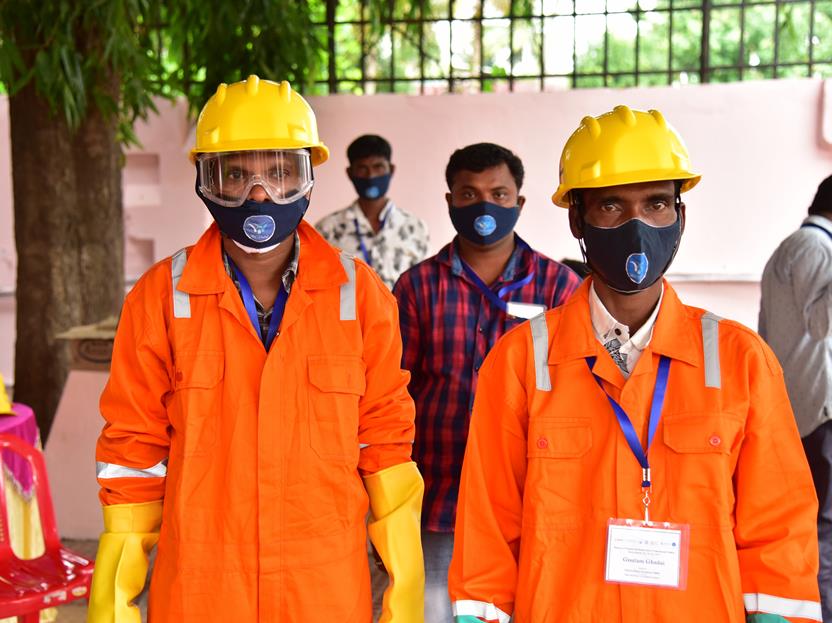
SANITATION WORKERS
We help professionalize sanitation workers through safety training, job training. We connect them to social sector schemes.
We help professionalize sanitation workers through safety training, job training. We connect them to social sector schemes.
Our sanitation workers work with minimal safety equipments, they dont follow safety procedures. We are still seeing sanitation workers die on their job. They work in informal sectors. They are not visible.


Our programs impact change at an ecosystem level - from grassroots to policy making.
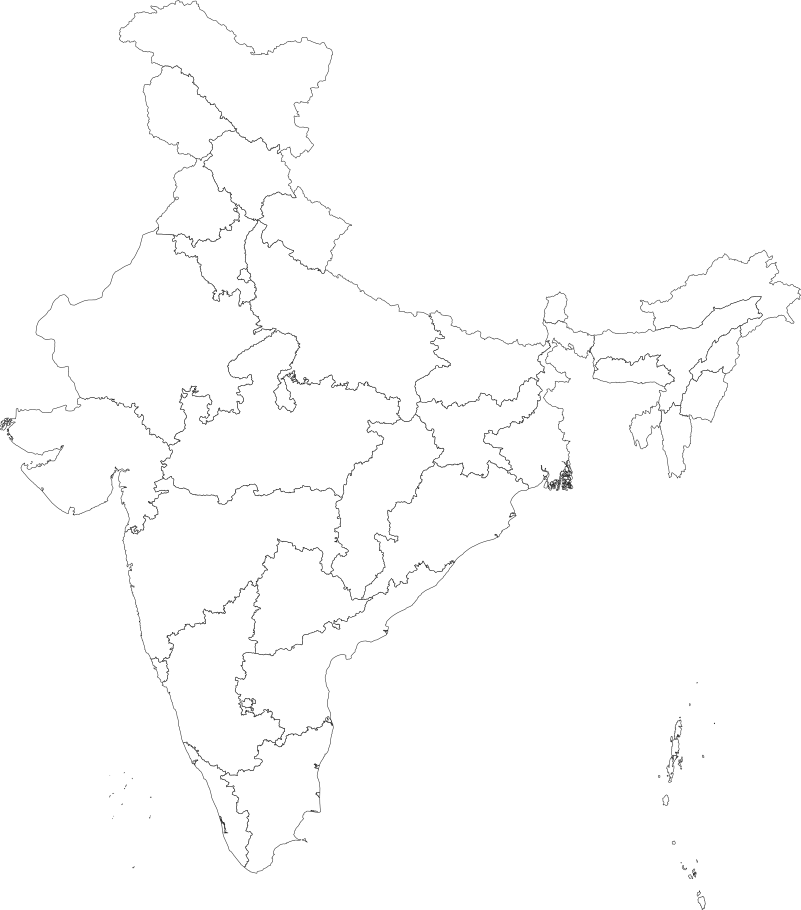
Have been have been capacitated to run their own Emergency Response Sanitation Units.
Have linked their sanitation workers to social sector schemes such as health insurance.
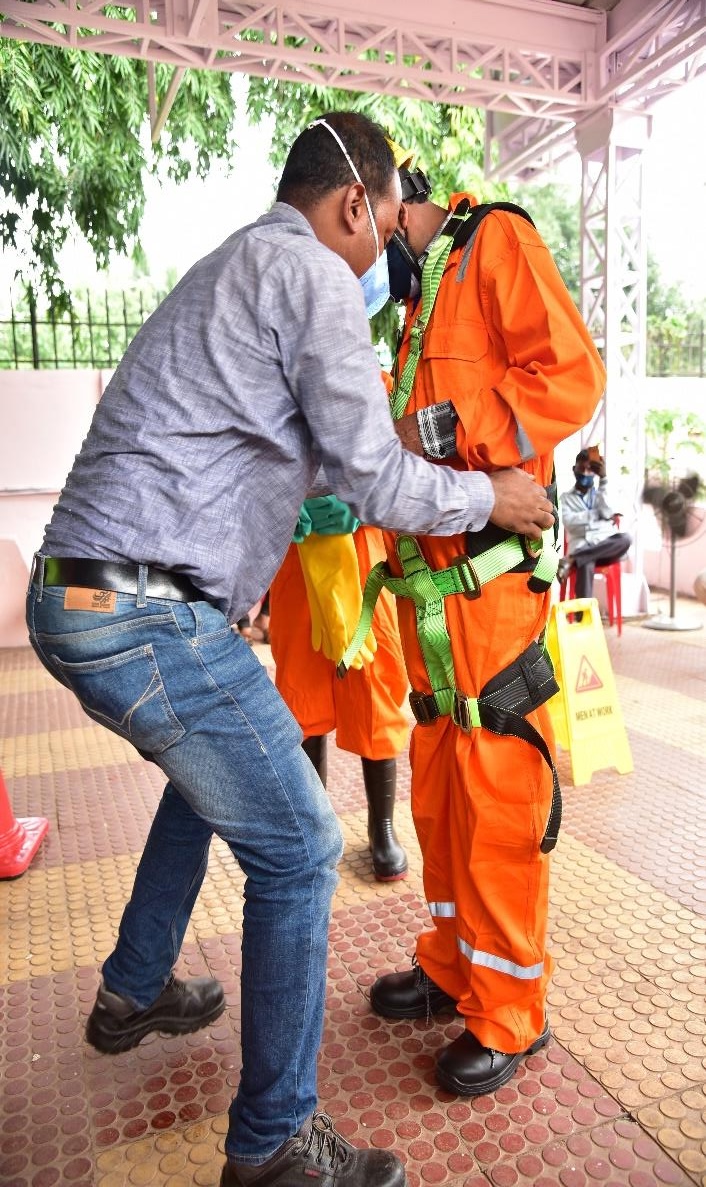
Saniation workers have been registered and provided with properly sized saniation equipment.
We systematically map and profile sanitation workers across cities, capturing critical dashboard data on demographics, wages, work conditions, and safety needs. This helps us reach previously unaccounted-for workers and target interventions under schemes like NAMASTE and M2M.
We build the skills and dignity of sanitation workers through safety training, certification and SOPs. Our ERSU and FSTP modules, delivered through WASH Academy and state institutes, help workers transition to safe, mechanized operations.
We connect workers to social protection schemes and have empowered women’s SHGs become key drivers of sanitation. By strengthening institutions and supporting policy convergence, we create a resilient and inclusive sanitation workforce
How we helped improve sanitation infrastructure, combining worker well-being with modern sanitation solutions.
Implementation of a digitally monitored safety gear dispersal system, creating a model for other municipalities.
Join our mission to transform the lives of sanitation workers across India. Whether you're a government entity, donor organization, or implementation partner, we're ready to collaborate.
Support our Sanitation Workers Program with funding that creates lasting impact.
Bring our expertise to your municipality to improve the lives of sanitation workers.
Partner with us on research, implementation, or technology development.
Yes. We tailor interventions based on local needs and can co-design city- or state-specific projects, including sanitation worker training, ERSU setup, and SHG capacity building.
We institutionalize training within state systems, develop master trainers, and build local capacity through ULBs and SHGs, ensuring the work continues beyond initial funding.
Success is measured through indicators like number of workers trained, welfare schemes accessed, ULBs activated, dashboards deployed, and safety standards improved—reported transparently to all partners.
Yes. We offer standardized and CPHEEO-approved training modules on safety, SOPs, mechanization, and emergency response. Trainings can be conducted through state institutes or WASH Academy.
We help train ERSUs, build state-level training infrastructure, and provide tools and protocols for confined space entry and emergency desludging services.
Yes. We support enumeration, digitization of worker data, PPE sizing, and creation of dashboards to improve planning, monitoring, and access to social protection schemes.